
Nighttime Anxiety: Why It Happens and How to Calm It
· 13 min read · Conversation Matcher
Key takeaways
- Anxiety feels worse at night because there are fewer distractions and you're tired — not because something is wrong with you.
- The fastest relief is calming your body (slow breathing, cool dark room) rather than arguing with the thoughts.
- When you're awake and alone at 2am, one real conversation can break the spiral faster than lying there fighting it.
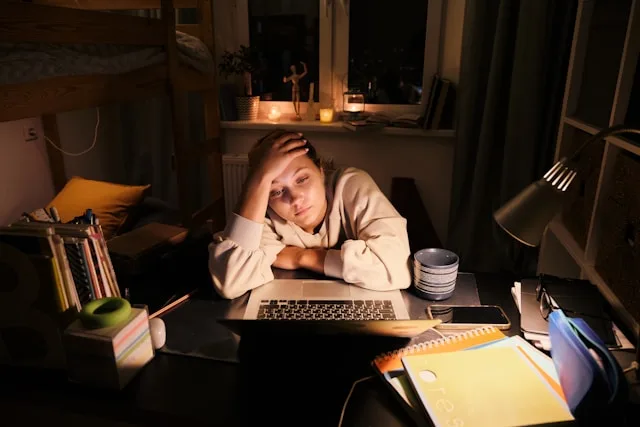
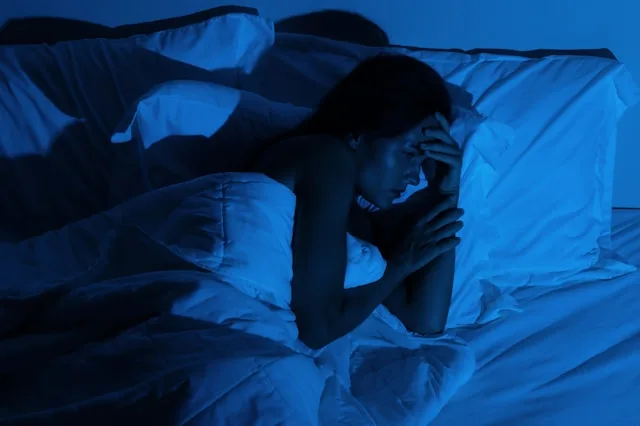
You were fine all day. Then the lights go off, the house goes quiet, and your mind switches on: a racing heart, a spinning head, a wave of dread about tomorrow or nothing in particular. If anxiety reliably shows up the moment you try to sleep — or jolts you awake at 3am — you are dealing with nighttime anxiety, and you are far from alone.
This is the complete guide: what nighttime anxiety is, its symptoms and causes, why 3am feels so uniquely awful, and twelve practical, evidence-informed ways to calm it — plus what to do on the nights you don't need a technique so much as another person.
What is nighttime anxiety?
Nighttime anxiety is anxiety that appears, or gets noticeably worse, at night — usually as you try to fall asleep or when you wake during the early hours. It is not a formal diagnosis on its own; it's a pattern, and an incredibly common one.
What makes it distinct is the timing. Plenty of people who feel steady and capable during the day find that the same worries turn loud and physical the moment they lie down. That is not a character flaw or a sign you're "broken." It's a predictable result of how tired, unstimulated brains work in the dark.
Symptoms of nighttime anxiety
Nighttime anxiety shows up as a mix of mental and physical symptoms. You might recognise:
- Racing or looping thoughts — replaying the day, dreading tomorrow, or worrying about worrying.
- A pounding or racing heart, sometimes with a tight chest.
- Restlessness — the urge to move, fidget, or check the clock.
- A sense of dread or being "wired but tired."
- Shallow, fast breathing.
- Muscle tension, a clenched jaw, or a knot in the stomach.
- Waking suddenly in the early hours with your mind already going.
- Fear of not sleeping — which itself keeps you awake.

If those physical symptoms tip into a racing heart, sweating, and a feeling of panic, you may be having a nighttime panic attack — frightening, but not dangerous, and it passes.
Nighttime anxiety, insomnia, or a panic attack?
These three overlap and feed each other, but telling them apart helps you respond to the right thing.
- Nighttime anxiety is the anxious state — a racing mind, dread, and physical tension — that shows up around sleep. It's the underlying weather.
- Insomnia is the difficulty falling asleep or staying asleep. Anxiety is one of its biggest drivers, and lost sleep then worsens anxiety the next night — a two-way loop that can spin for weeks.
- A nighttime panic attack is a sudden surge of intense fear that wakes you with a pounding heart, shortness of breath, sweating, or a sense of doom, usually peaking within minutes. It feels genuinely dangerous but isn't, and it always passes.
Knowing which you're facing points you to the right tool: grounding and slow breathing for a panic surge; worry-management and sleep hygiene for the anxiety–insomnia loop. If panic attacks are frequent, or the loop has lasted more than a few weeks, that's worth professional support. Our page on insomnia covers the sleep side in more depth.
Why anxiety feels worse at night
There are real, non-mysterious reasons the same worry feels enormous at midnight and manageable at noon.
- Nothing to distract you. All day, tasks, people, and screens keep worries in the background. At night that noise disappears, so the thoughts you outran finally catch up.
- You're tired. A tired brain is worse at regulating emotion. Fatigue turns the volume up on fear and turns down your ability to talk yourself back down.
- The dark and quiet. Less light and less input give the mind more room to spiral, and darkness itself can heighten a sense of threat.
- Cortisol rhythms. Your stress hormone naturally dips and then climbs toward morning; on an already-stressed system, that early-hours rise can nudge you awake and alert.
- No "off" ritual. Going straight from a stimulating day (or a phone) to lights-out gives your nervous system no runway to wind down.
None of this means something is wrong with you. It means the deck is stacked at night — and that a few deliberate changes genuinely help.
What causes nighttime anxiety?
Beyond why night amplifies anxiety, several things commonly trigger it:
- Daytime stress you never processed. Unfelt worries surface when you finally stop moving.
- Caffeine and alcohol. Caffeine lingers for hours; alcohol may knock you out but fragments sleep and spikes anxiety in the early hours.
- Screens and scrolling in bed. Blue light delays sleep, and doomscrolling feeds the anxious mind exactly what it craves.
- An irregular sleep schedule. Wildly different bed and wake times leave your body clock confused and on edge.
- The sleep-anxiety loop. Worrying about not sleeping is itself arousing — so the fear of insomnia causes insomnia.
- Deeper roots. Sometimes nighttime anxiety is linked to an anxiety disorder, past trauma, or a physical health issue (thyroid, blood sugar, sleep apnoea). If it's persistent, that's worth a conversation with a doctor.
For the specifically thought-driven version of this, our guide on how to stop overthinking at night goes deeper, and the topic pages on anxiety at night and racing thoughts before sleep help too.
What to avoid in the hours before bed
Half of calming nighttime anxiety is simply removing what feeds it. In the two to three hours before sleep, try to ease off:
- Caffeine. It has a long half-life — that mid-afternoon coffee can still be working at midnight. Cut it off by early afternoon.
- Alcohol. It may help you drop off, but it fragments sleep and reliably spikes anxiety in the early hours.
- Screens and doomscrolling. Blue light delays melatonin, and the content gives an anxious mind exactly what it craves.
- Intense late exercise. Great earlier in the day; too close to bed it raises adrenaline and body temperature.
- Heavy or late meals. Digestion and blood-sugar swings can disturb sleep and even mimic anxiety symptoms.
- Charged conversations or the news. Save the hard stuff for daylight — the pre-sleep window should wind you down, not stir you up.
- Working in bed. It teaches your brain that bed is a place for alertness, not rest.
None of this has to be perfect. Even shifting one or two — moving caffeine earlier, swapping the phone for a book — can noticeably lower how wired you feel at lights-out.
Waking up with anxiety at 3am — why it happens
One of the most common (and most miserable) forms of nighttime anxiety is waking in the small hours — 3am, 4am — instantly alert and anxious.
Part of this is normal sleep architecture: everyone surfaces briefly between sleep cycles. Toward morning, sleep is lighter and cortisol is rising, so a brief waking is more likely to become full wakefulness. On a stressed or under-slept system, your mind seizes that moment and starts racing before you're even properly awake.
The cruel part is what happens next: you check the clock, calculate how little sleep is left, and panic about being tired tomorrow — which guarantees you stay awake. Breaking that clock-checking, catastrophising chain is one of the most useful things you can learn.
How to calm nighttime anxiety: 12 techniques
You will not switch anxiety off like a light, and you don't need to. The aim is to lower the alarm enough that sleep can return. Pick two or three tonight.
- Slow your breathing. Make your out-breath longer than your in-breath (try in for 4, out for 6). A long exhale is the single fastest way to signal your nervous system that you're safe.
- Get up if you've been awake 20+ minutes. Lying there fighting it trains your brain to link bed with stress. Sit somewhere dim and calm until you feel sleepy, then return.
- Have a "worry window" earlier. Spend 10 minutes in the evening writing down worries and any next actions. When they return at night, you can honestly tell yourself you've already given them time.
- Empty your head onto paper. Keep a notebook by the bed. Getting a loop out of your head tells your brain it's safe to stop holding it.
- Stop checking the clock. Turn it away. The math of "only 4 hours left" adds panic and changes nothing.
- Cool, dark, and phone-free. A cooler room supports sleep; darkness lowers threat signals; and the phone charging across the room removes the biggest anxiety feeder.
- Try a body scan or grounding. Slowly move attention from your toes to your head, or name five things you can feel. It gives the mind somewhere dull to rest instead of the worry.
- Reframe the 3am version. Remind yourself: "This is the tired, night-time version of this thought. It will look smaller at 10am." Then let it wait.
- Watch caffeine and alcohol. Cut caffeine after early afternoon, and notice whether that evening drink is behind your 3am wakings.
- Build a wind-down ritual. Give your nervous system 30–60 minutes of low, screen-free runway before bed — dim lights, a book, a warm shower.
- Keep wake times steady. A consistent wake time (even after a bad night) does more to stabilise sleep than any single trick.
- Say it out loud to someone. A worry spoken to another person shrinks in a way it never does looping in your head — especially at night, when it feels biggest.
How to fall back asleep after you wake up anxious
Waking at 3am needs a slightly different playbook from falling asleep at bedtime, because now you're fighting anxiety and frustration. A calm sequence:
- Don't check the clock or your phone. Both pour fuel on the fire — one starts the sleep math, the other floods you with light and input. Keep your eyes closed.
- Breathe before you think. Ten slow breaths with a long out-breath, before you engage with a single thought. Lower the body first; the mind follows.
- Name it and let it wait. "This is 3am anxiety. It's the tired version. It can wait until morning." You don't have to solve anything right now.
- If you're still wired after ~20 minutes, get up. Go somewhere dim and do something boring and screen-free — read a dull page, sit quietly — until sleepiness returns. This protects the bed-equals-sleep association.
- Don't do the sleep math. "Only four hours left" changes nothing except your heart rate. Rest itself — lying calmly, even awake — still restores you.
- Accept the night if it won't come. Paradoxically, releasing the pressure to sleep is often what lets sleep return. One rough night is survivable; treating it as a catastrophe is what keeps you up.
Does nighttime anxiety go away?
For most people, yes — or it becomes far more manageable. Nighttime anxiety is largely a set of habits (of thought, routine, and physiology), and habits respond to consistent, gentle change. Many people notice real improvement within a few weeks of protecting their wind-down, cutting late caffeine, and practising the breathing and get-up-if-awake rules.
Deeper or long-standing anxiety may need more — therapy such as CBT-I (a sleep-focused cognitive behavioural therapy) is highly effective, and sometimes medical input helps. But the direction matters more than the speed: every calm night you build makes the next one a little easier, and the 3am spiral loosens its grip over time.
When nighttime anxiety needs more than self-help
Occasional anxious nights are normal. But if nighttime anxiety is frequent, exhausting, or wrecking your days, it may be part of something treatable like generalised anxiety or panic disorder — and help works.
Please speak to a doctor or mental-health professional if the anxiety is relentless, if you're having regular panic attacks, if it comes with persistent low mood or hopelessness, or if you're using alcohol or other substances to get to sleep. For the science of sleep and anxiety, the Sleep Foundation is a solid, evidence-based resource.
If you are in crisis or having thoughts of harming yourself, please contact 988 (US & Canada) or Samaritans 116 123 (UK & Ireland), or your local emergency number. See our get help now page for more.
When you're awake and alone at 2am
Here is the part no technique fully covers. Some of what makes nighttime anxiety so awful is the aloneness of it — everyone you know is asleep, and it feels like you're the only person awake and afraid in the world.
You're not. Right now, plenty of people are lying awake feeling exactly the same. And on the nights when the breathing exercises aren't enough, sometimes what actually helps is simply not being alone with it — talking to another person who's also up.
That's what Conversation Matcher is for. It matches you one-to-one with a real person who chose the same topic and is awake too — any hour, free, and anonymous by default. There's no feed and no audience; just one honest conversation to take the edge off. If tonight is one of those nights, here's a gentle place to start: someone to talk to at night.
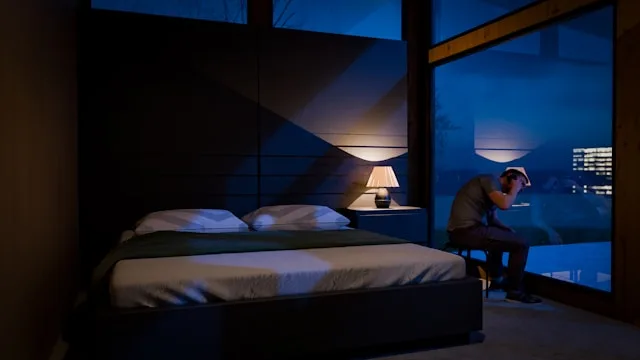
To be clear, this is peer support, not therapy or crisis care — but being heard by another human, even a kind stranger, can quiet a 2am spiral enough to let you rest. If it helps to prepare, how to talk to someone about anxiety is a good companion read.
Frequently asked questions
What is nighttime anxiety? Nighttime anxiety is anxiety that appears or gets worse at night — as you try to fall asleep, or when you wake in the early hours. It shows up as racing thoughts, a pounding heart, dread, or restlessness, and it's extremely common even in people who feel fine during the day.
Why is my anxiety worse at night? The day's distractions fall away, so worries you outran all day catch up. You're also tired, which weakens emotional regulation, and the quiet and dark leave more room to spiral — so the same thought feels far bigger at 2am than at noon.
What causes nighttime anxiety? Common causes include unprocessed daytime stress, caffeine or alcohol, screens before bed, an irregular sleep schedule, and the cycle of worrying about not sleeping. Sometimes it's linked to an anxiety disorder, trauma, or a health condition worth checking with a doctor.
Why do I wake up at 3am with anxiety? Sleep is lighter toward morning and cortisol is rising, so a brief natural waking is more likely to become full wakefulness — and on a stressed or under-slept system, the mind starts racing before you're properly awake.
How do I stop nighttime anxiety? Slow your breathing (longer out-breath than in), get worries onto paper earlier in the evening, keep the room cool, dark and phone-free, and get out of bed if you've been awake 20+ minutes. If it's relentless, talk to someone or see a doctor.
- anxiety
- sleep
- mental-health