

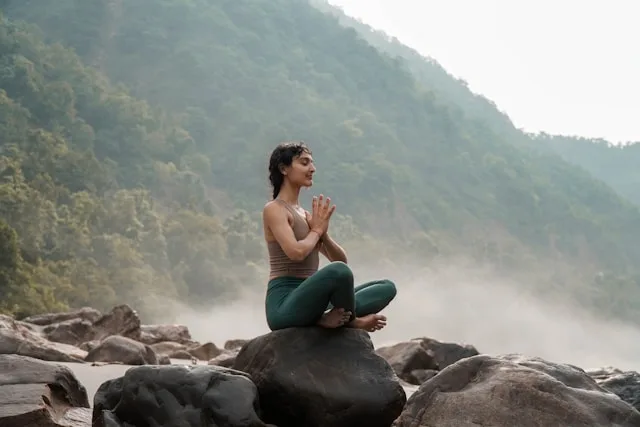
Understanding Meditation: A Complete Guide
Meditation is not about emptying your mind, achieving enlightenment, or escaping your problems. It is a practice of paying attention on purpose, with gentleness and without judgment. Meditation teaches you to observe your thoughts and feelings without being controlled by them. It creates space between stimulus and response, helping you choose how to act rather than react automatically. Meditation is simple, but not easy. It requires consistency, patience, and the willingness to sit with discomfort. What meditation offers in return is profound: emotional regulation, mental clarity, inner peace, and a deeper connection to yourself.
500M+ people worldwide practice some form of meditation regularly 76% reduction in stress levels after 8 weeks of consistent meditation practice 12 minutes Daily minimum practice time to see measurable mental health benefitsWhat Meditation Really Is
Meditation is training for your mind. Just as physical exercise strengthens your body, meditation strengthens your capacity for awareness, focus, and emotional balance. At its core, meditation is about learning to be present with your experience—whatever that experience is—without trying to change it, fix it, or run from it.
This is harder than it sounds. Your mind is conditioned to constantly seek stimulation, solve problems, and escape discomfort. Mindfulness meditation asks you to do the opposite: to simply observe, without interfering. Over time, this practice changes how you relate to your thoughts, emotions, and sensations. You develop the ability to witness your mental activity without being swept away by it. You learn that thoughts are not facts, emotions are not emergencies, and discomfort is not danger.
Key InsightMeditation is not about controlling your mind—it is about understanding it. The goal is not to stop thinking or force yourself into some peaceful state. The goal is to see your mind clearly, recognize its patterns, and develop a different relationship with your thoughts and feelings. Peace emerges naturally from this understanding, not from forcing yourself to feel calm.
Table 1: What Meditation Is and Is Not
| Meditation IS | Meditation IS NOT |
|---|---|
| Training your attention and awareness | Emptying your mind or stopping thoughts |
| Observing thoughts without attachment | Forcing yourself into a peaceful state |
| Being present with whatever arises | Escaping from your problems or feelings |
| A practice requiring consistency and patience | A quick fix for stress or anxiety |
| Secular practice with measurable benefits | Exclusively religious or spiritual |
| Accessible to everyone, regardless of belief | Only for certain types of people |
The Science of Meditation
Meditation is not mystical or esoteric—it is a well-researched practice with measurable effects on brain structure and function. Thousands of scientific studies have documented meditation's impact on mental health, emotional awareness, physical health, and cognitive performance. The benefits are not anecdotal—they are neurologically observable.
Table 2: Evidence-Based Benefits of Meditation
| Category | Research-Backed Benefits |
|---|---|
| Brain Structure | Increases gray matter density in areas associated with learning, memory, emotional regulation, and perspective-taking. Strengthens prefrontal cortex (decision-making) and reduces amygdala size (fear response). See research from Harvard Medical School. |
| Mental Health | Reduces symptoms of anxiety, depression, and PTSD. Decreases rumination and catastrophic thinking. Improves mood stability and psychological resilience. |
| Emotional Regulation | Enhances ability to recognize and manage emotions. Increases emotional granularity (ability to identify specific emotions). Reduces emotional reactivity and impulsivity. |
| Stress Response | Lowers cortisol levels and reduces physiological stress markers. Improves heart rate variability (indicator of stress resilience). Strengthens parasympathetic nervous system (rest and digest). |
| Cognitive Function | Improves attention span, working memory, and cognitive flexibility. Reduces age-related cognitive decline. Enhances problem-solving and creative thinking. |
| Physical Health | Reduces blood pressure and chronic pain. Improves sleep quality and immune function. Slows cellular aging (longer telomeres). |
| Relationships | Increases empathy, compassion, and prosocial behavior. Improves communication and reduces relationship conflict. Strengthens sense of connection to others. |
Types of Meditation
Meditation is not one practice—it is a category of practices with different techniques, focuses, and approaches. The right type of meditation depends on your goals, temperament, and current needs. Some types cultivate calm. Others develop insight. Some build compassion. Experimenting with different styles helps you discover what works best for you.
Table 3: Major Categories of Meditation
| Type | Technique | Primary Benefits |
|---|---|---|
| Mindfulness Meditation | Observe thoughts, sensations, and emotions without judgment. Focus on breath or body sensations. Return attention when mind wanders. | Present-moment awareness, emotional regulation, reduced reactivity, stress reduction. |
| Focused Attention | Concentrate on a single object: breath, mantra, candle flame, sound. When attention drifts, gently redirect it. | Concentration, mental discipline, reduced mind-wandering, improved focus. |
| Body Scan | Systematically focus attention on different body parts, noticing sensations without trying to change them. | Body awareness, tension release, pain management, grounding during anxiety. |
| Loving-Kindness (Metta) | Silently repeat phrases of goodwill toward yourself and others: "May I be happy, may I be healthy, may I be safe, may I be at ease." | Self-compassion, empathy, reduced resentment, increased prosocial feelings. |
| Walking Meditation | Walk slowly and deliberately, focusing on physical sensations of each step, movement, and contact with ground. | Integrating mindfulness into movement, useful for restless minds, grounding. |
| Visualization | Mentally create detailed imagery: peaceful scenes, desired outcomes, symbolic journeys. | Relaxation, goal-setting support, managing anxiety, accessing creativity. |
| Vipassana (Insight) | Observe reality as it is: impermanence, suffering, non-self. Notice arising and passing of sensations with equanimity. | Deep self-understanding, liberation from attachment, insight into nature of mind. |
| Transcendental Meditation | Silently repeat a personalized mantra for 15-20 minutes twice daily in specific format taught by certified teachers. | Deep relaxation, stress reduction, consistent routine, structured approach. |
Many beginners try a new meditation technique every few days, never giving any practice enough time to work. This is like digging many shallow holes instead of one deep well. Choose one approach that resonates with you and practice it consistently for at least 30 days before evaluating its effectiveness or switching techniques. Depth comes from consistency, not variety.
How to Start Meditating: The 8-Step Beginner's Guide
Starting a meditation practice is simple in theory but challenging in execution. The barriers are not technical—they are psychological. Your mind will resist stillness. Your body will feel uncomfortable. Doubt will arise. These challenges are normal. The following steps provide a structured path through the initial difficulties.
-
Start Impossibly Small
Begin with just 3-5 minutes daily. This seems trivial, but consistency is more important than duration. Your goal is to establish the habit, not achieve enlightenment. Once 5 minutes becomes automatic, gradually increase to 10, then 15, then 20 minutes.
-
Choose One Technique
Select a single meditation method—mindfulness of breath is ideal for beginners. Stick with it for at least 30 days before exploring other styles. Mastery comes from repetition, not experimentation.
-
Set a Consistent Time and Place
Meditate at the same time daily, ideally morning before your day begins. Create a dedicated space—even a specific chair or cushion. Consistency of time and place builds the habit faster than variable practice.
-
Understand the Instructions
For mindfulness of breath: Sit comfortably. Close your eyes. Focus on the physical sensation of breathing—chest rising, belly expanding, air at nostrils. When your mind wanders (it will), gently return attention to breath. That is the entire technique.
-
Expect Discomfort
Your body will ache. Your mind will race. You will feel bored, restless, frustrated. This is not failure—this is the practice. You are learning to sit with discomfort rather than immediately escaping it. The discomfort decreases over time as your capacity for stillness grows.
-
Be Absurdly Gentle With Yourself
You will forget to meditate. Your mind will wander constantly. You will doubt whether you are doing it "right." All of this is normal. Meditation is not about perfect performance—it is about compassionate persistence. Each time you notice you have wandered and return, that is success.
-
Use Guidance Initially
Apps like Headspace, Calm, Insight Timer, or ConversationMatcher resources provide structured guidance for beginners. A teacher's voice helps you stay focused and understand the practice. As you develop skill, you can transition to unguided meditation.
-
Track Consistency, Not Quality
Do not evaluate whether each session was "good" or "bad." Simply track whether you meditated. Build a streak. The quality of your practice will naturally improve with consistency. Focus on showing up, not performing perfectly.
Commit to 7 consecutive days of 5-minute mindfulness meditation. Day 1-2: Notice how difficult it feels to sit still. Day 3-4: Observe patterns in your wandering mind. Day 5-6: Notice moments of genuine presence. Day 7: Reflect on what changed. This challenge builds proof that you can maintain a practice. Use a meditation timer app or simple phone timer. Track completion each day. Do not skip a day—consistency is the entire point.
Common Challenges and How to Navigate Them
Every meditator encounters obstacles. These challenges are not signs that meditation is not working—they are the practice itself. How you relate to difficulty in meditation mirrors how you relate to difficulty in life. Learning to work skillfully with meditation challenges develops skills that transfer to every area of your life.
Table 4: Meditation Obstacles and Solutions
| Challenge | Why It Happens | How to Work With It |
|---|---|---|
| Mind Constantly Wandering | This is normal—the mind wanders thousands of times. It is not a problem to solve but a fact to accept. | Each time you notice wandering, gently return to breath. The noticing and returning IS the practice. Celebrate each return—that is success. |
| Physical Discomfort | Unfamiliar posture, tension release, heightened body awareness. | Adjust position as needed. Explore whether discomfort is harm (adjust) or just unfamiliarity (observe). Use chair instead of floor if needed. |
| Falling Asleep | You are sleep-deprived, meditating lying down, or practicing right before bed. | Meditate sitting upright. Practice earlier in day. Open eyes slightly. If chronically tired, prioritize sleep before meditation. |
| Restlessness and Agitation | Excess energy, anxiety, resistance to stillness, caffeine, stress. | Try movement practices first: yoga, walking. Use counting breath (in-2-3-4, out-2-3-4). Accept restlessness as temporary state—observe it without fighting it. |
| Boredom | Mind craves stimulation. Meditation lacks novelty and entertainment. | Recognize boredom as mental state, not objective fact. Investigate the feeling itself—where in body, what thoughts accompany it? Boredom becomes interesting when examined closely. |
| Doubt ("Am I doing this right?") | Perfectionism, comparing yourself to idealized images of meditation, lack of immediate results. | If you are sitting with intention to be present, you are doing it right. There is no perfect meditation. Results are cumulative—trust the process. |
| Emotional Discomfort | Meditation creates space for suppressed emotions to surface. This is therapeutic, not harmful. | Allow feelings without needing to fix them. If overwhelmed, open eyes, ground yourself, return to breath. Consider therapy if intense emotions consistently arise. |
| Lack of Time | Perception that meditation requires long sessions or special circumstances. | Five minutes is enough. Meditate before checking phone in morning. Viewing "no time" as actual priority issue—you make time for what matters. |
Deepening Your Practice
Once you establish consistency, you can deepen your practice. Depth comes not from complex techniques but from increased subtlety of awareness, longer sessions, and integration of meditation insights into daily life. Deepening is a natural process that unfolds over months and years, not days or weeks.
Ways to deepen your meditation practice:
- Extend Session Length Gradually: Once 10-15 minutes feels sustainable, gradually increase to 20-30 minutes. Longer sessions allow deeper settling and access to subtler states of awareness.
- Practice Twice Daily: Morning and evening practice compounds benefits. Morning sets intention for the day; evening processes daily experiences.
- Attend a Retreat: Multi-day silent retreats (3-10 days) dramatically deepen practice. Extended practice reveals patterns invisible in daily sessions. Consider retreats by Vipassana, Insight Meditation Society, or local centers.
- Study Meditation Philosophy: Understanding the why behind techniques deepens commitment. Explore teachings from Buddhist psychology, mindfulness research, or mental health conversations about contemplative practices.
- Find a Teacher or Community: A qualified teacher provides personalized guidance. Meditation communities offer support, accountability, and shared practice. Look for local sitting groups or online sanghas.
- Investigate Specific Experiences: As practice deepens, explore particular states: concentration, insight, compassion, equanimity. Different techniques cultivate different qualities.
- Integrate Mindfulness Into Activities: Bring meditative awareness to eating, walking, conversations, chores. Formal practice trains attention; informal practice applies it to life.
Meditation Posture: Finding What Works
Posture matters because it supports alertness without creating unnecessary discomfort. The ideal posture is upright, relaxed, stable, and sustainable for your session length. There is no single "correct" posture—there is the posture that works for your body and supports your practice.
Table 5: Meditation Posture Options
| Posture | Description | Best For |
|---|---|---|
| Chair Sitting | Sit upright in chair, feet flat on floor, hands resting on thighs or lap. Back away from chair back if possible. | Beginners, physical limitations, longer sessions, most accessible option. |
| Cushion (Seiza) | Kneel with meditation bench or cushion between legs, supporting weight. Shins on floor, spine upright. | Those who find cross-legged uncomfortable, good knee support, stable base. |
| Cross-Legged (Easy Pose) | Sit on cushion with legs loosely crossed, hips elevated above knees, spine naturally upright. | Flexible hips, traditional posture, requires cushion elevation for comfort. |
| Half/Full Lotus | Advanced cross-legged positions with feet on opposite thighs. Very stable but requires significant flexibility. | Experienced meditators with hip flexibility, longer retreats, traditional practice. |
| Lying Down (Corpse Pose) | Lie on back, arms at sides, legs slightly apart. Requires intentional alertness to avoid sleep. | Body scan meditation, severe physical limitations, when sitting is impossible. High sleep risk. |
Key posture principles:
- Upright but Not Rigid: Spine naturally erect, shoulders relaxed, chin slightly tucked.
- Stable and Balanced: Weight evenly distributed, feeling grounded and secure.
- Relaxed Yet Alert: Body relaxed enough to sit comfortably, alert enough to avoid drowsiness.
- Sustainable: Can maintain for your entire session without pain requiring constant adjustment.
Building a Consistent Practice
Consistency is meditation's most important element. A daily 5-minute practice surpasses an occasional 60-minute session. Meditation works through neurological changes that require repetition. One-time practice provides temporary calm. Consistent practice restructures your brain and transforms your relationship with your mind.
Table 6: Strategies for Meditation Consistency
| Strategy | Implementation |
|---|---|
| Anchor to Existing Habit | Meditate immediately after established routine: morning coffee, brushing teeth, arriving at desk. Habit stacking makes new behavior automatic. |
| Set Environment Cues | Leave meditation cushion visible. Set out cushion/chair night before. Create visual reminders that trigger practice. |
| Lower the Barrier | Commit to minimum viable practice: sit for just 3 minutes, or even 1 minute on difficult days. Lowering barrier maintains streak, preventing all-or-nothing thinking. |
| Track Completion | Use habit tracker app, calendar check-marks, or meditation journal. Visual streak builds momentum and motivation. |
| Eliminate Decision Fatigue | Pre-decide time, place, duration, technique. Remove daily decision-making that creates opportunities for avoidance. |
| Accountability Partner | Share commitment with friend, join meditation group, or use conversation support to maintain accountability. |
| Reframe Resistance | Notice when you do not want to meditate. Recognize this resistance as mental pattern, not truth. Sit anyway—resistance usually dissolves once you begin. |
| Celebrate Micro-Wins | Acknowledge each completed session. Celebrate weekly streaks. Positive reinforcement strengthens habit formation. |
Integrating Meditation Into Daily Life
The ultimate goal of meditation is not to have good meditation sessions—it is to live more mindfully. Formal practice is training. Real transformation happens when you apply meditative awareness to work, relationships, challenges, and daily activities. This integration distinguishes meditation as a hobby from meditation as a life practice.
Practical ways to integrate mindfulness throughout your day:
- Mindful Transitions: Use moments between activities as mini-meditations—three conscious breaths before starting a new task, during commute, before eating.
- STOP Practice: When stressed, stop what you are doing, take a breath, observe your experience, then proceed with awareness.
- Mindful Listening: In conversations, practice full attention on speaker without planning your response. Notice when attention wanders and gently return to listening. Explore active listening techniques.
- Notice Triggers: Use meditation skills to observe emotional reactions in real-time. Create space between trigger and response—that space is where choice lives.
- Mindful Consumption: Eat one meal daily with full attention—no phone, TV, reading. Notice taste, texture, sensations. Apply same principle to media consumption.
- Body Check-Ins: Several times daily, pause and scan body for tension, breath pattern, emotional state. This builds continuity between formal practice and daily life.
- Embrace Waiting: Transform waiting (traffic, lines, holds) into practice opportunities. These moments are meditation, not wasted time.
When Meditation Feels Like It's Not Working
Periods where meditation feels stagnant, frustrating, or pointless are normal and expected. Progress is not linear. You will experience plateaus, regressions, and doubt. These difficult periods often precede breakthroughs. The practice is working even when it does not feel like it.
What to do when meditation feels stuck:
- Trust the Process: Benefits accumulate invisibly. Neurological changes happen before you notice psychological shifts. Consistency matters more than immediate experience.
- Examine Expectations: Are you expecting constant bliss or immediate transformation? Meditation is training, not magic. Adjust expectations to match reality.
- Notice Subtle Changes: Look for small shifts: pausing before reacting, noticing thoughts earlier, recovering faster from stress. These are significant progress even if not dramatic.
- Vary Technique Temporarily: If stuck, try different style for a week: walking meditation, body scan, loving-kindness. Fresh approach can reignite engagement.
- Seek Guidance: Talk to teacher, therapist, or experienced practitioner. External perspective often clarifies what you cannot see from inside your experience.
- Return to Basics: Simplify practice. Focus only on breath. Release complex techniques or advanced goals. Sometimes going back to fundamentals creates breakthrough.
- Remember Your Why: Reconnect with original motivation for starting meditation. What benefits have you already experienced? What would life be like if you stopped practicing?
Meditation for Specific Goals
While meditation's core is present-moment awareness, different techniques emphasize different outcomes. Matching technique to goal increases effectiveness. However, remember that meditation works holistically—improving one area tends to improve others.
Table 7: Matching Meditation Technique to Goal
| Goal | Recommended Techniques | Why It Works |
|---|---|---|
| Reduce Anxiety | Mindfulness meditation, body scan, breath focus | Develops awareness of anxious thoughts without believing them. Regulates nervous system through breath attention. See living with anxiety resources. |
| Improve Focus | Focused attention meditation, mantra repetition | Trains attention muscle through repeated returning to single object. Strengthens prefrontal cortex control over wandering mind. |
| Manage Depression | Mindfulness-Based Cognitive Therapy (MBCT), loving-kindness | Interrupts rumination patterns. Develops self-compassion. Creates space between thought and belief. Learn more at MBCT.com. |
| Increase Compassion | Loving-kindness (Metta), compassion meditation | Directly cultivates feelings of goodwill toward self and others. Rewires default reactions from judgment to kindness. |
| Better Sleep | Body scan, yoga nidra, breath-counting | Activates relaxation response. Shifts attention from worries to bodily sensations. Creates ritual signaling sleep time. |
| Emotional Healing | Vipassana, mindfulness, guided visualization | Creates safe space for processing difficult emotions. Develops equanimity with painful experiences. Consider pairing with emotional support or therapy. |
| Spiritual Growth | Vipassana, contemplative prayer, open awareness | Reveals nature of self, impermanence, interconnection. Supports spiritual awakening and deepening of existential understanding. |
Frequently Asked Questions
How long before I see results from meditation?
Most people notice subtle benefits within 1-2 weeks: slightly better sleep, moments of increased calm, improved focus. Significant psychological changes typically emerge after 6-8 weeks of consistent daily practice. Brain structure changes are measurable after 8 weeks. However, meditation is not a project to complete—it is a practice to maintain. Benefits deepen continuously over months and years.
Do I have to sit on the floor or in lotus position?
No. You can meditate sitting in a chair, kneeling on a bench, or even lying down (though this increases sleep risk). The essential elements are an upright spine and a position you can maintain comfortably for your session length. Cultural imagery of lotus position creates unnecessary barriers. Choose what works for your body.
My mind will not stop thinking. Am I doing it wrong?
Your mind is supposed to think—that is what minds do. Meditation is not about stopping thoughts. It is about changing your relationship with them. The goal is to observe thoughts without getting lost in them, to notice when you have wandered and gently return. This returning—hundreds of times per session—is the practice. You are doing it exactly right.
Is meditation religious? Do I have to be Buddhist?
Meditation has roots in multiple religious traditions, particularly Buddhism. However, modern mindfulness meditation is secular and scientifically validated. You do not need any religious beliefs to practice or benefit from meditation. It is a mental training technique, like physical exercise for the mind. Many practitioners integrate meditation with their existing faith traditions or practice it entirely secularly.
What if meditation brings up difficult emotions or memories?
This is common. Meditation creates space for suppressed emotions to surface. This is actually therapeutic—emotions need to be felt to be processed. However, if meditation consistently triggers overwhelming distress, trauma memories, or panic, work with a trauma-informed therapist before continuing meditation practice. Some people need professional support to safely process stored pain.
Can I meditate lying down, or will I fall asleep?
You can meditate lying down, but sleep risk is high. Lying down is best for body scan meditation or when sitting is physically impossible. For alertness, sit upright in a chair or on cushion. If you consistently fall asleep while meditating, you may simply be sleep-deprived. Prioritize adequate sleep—it is foundational to effective practice.
Should I use guided meditations or practice in silence?
Both have value. Guided meditations provide structure and instruction, especially helpful for beginners or when learning new techniques. As you gain experience, practicing in silence allows deeper independence and self-reliance. Many long-term practitioners use both: guided meditations for new techniques or challenging days, silent practice for established routines. Start with guidance, gradually transition to silence.
Can meditation replace therapy or medication?
Meditation is a powerful tool but not a replacement for professional mental health care. Research shows meditation effectively complements therapy and sometimes reduces medication needs, but severe depression, anxiety disorders, trauma, or psychiatric conditions require professional treatment. Think of meditation as one component of comprehensive mental health care, not a substitute. Discuss meditation with your healthcare providers as part of your treatment plan. Explore more at emotional support vs. therapy.
Remember: Meditation is not about achieving some special state or becoming a different person. It is about training your attention, understanding your mind, and relating to your experience with wisdom and compassion. The practice is simple—return to the present moment, again and again. Everything else unfolds naturally from that fundamental act.
Talk about meditation — with someone who gets it
Get matched one-to-one with a real person who chose the same topic. Free, anonymous, any time.
Keep reading: How to talk about your feelings.